Monument will be the first statue on State House grounds in honor of an African-American
South Carolina took another step this month toward honoring Robert Smalls, the formerly enslaved man who escaped to freedom, served the Union during the Civil War and later became one of the state’s most important political leaders.
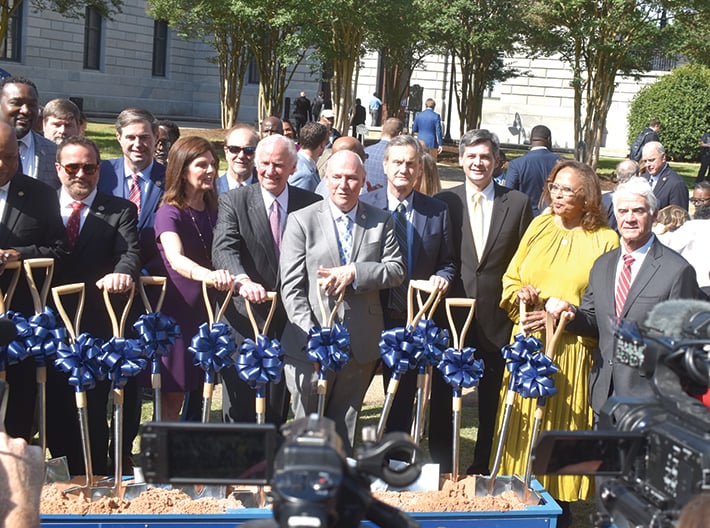
State officials and members of the Robert Smalls Monument Commission gathered May 13 for a ceremonial groundbreaking on the State House grounds, where the monument will be placed near the African American History Monument. The project is being described as the first individual monument dedicated to a Black South Carolinian on the Capitol grounds.
The monument’s approval followed years of planning and a legislative process shaped by a 2007 moratorium on new memorials on the State House grounds. That law created a path for exceptions if a monument represented “enduring significant historical contributions” by a South Carolinian. Commission leaders said all legislative approvals have now been secured, and the effort has entered the fundraising stage.
Robert Smalls’ life has long stood out in South Carolina history. Born enslaved in Beaufort, he became a Civil War hero, naval pilot, legislator, congressman and educator, and he helped shape Reconstruction-era public life in the state. Supporters of the monument say his story belongs on the State House grounds alongside the figures already commemorated there.
Backers of the project also say the monument carries significance beyond symbolism. They describe it as a public statement about the breadth of South Carolina history and a way to ensure that future generations encounter Smalls’ legacy in a visible, permanent place at the center of state government.
Fundraising push
The commission is now working to raise private money for the project, which one report said is expected to cost between $1 million and $2 million. Organizers have said the statue’s construction and installation depend on successful fundraising after the approvals and design work were completed.
At the groundbreaking, supporters framed the monument as both a correction and a celebration. They said it should be viewed not as a monument for one group, but as a tribute to courage, patriotism, perseverance and public service in South Carolina history.
Why it matters
The monument would change the visual story told on the State House grounds, which for generations featured memorials to figures tied to the Confederacy and segregation. Smalls’ statue would stand as a prominent acknowledgment of Black leadership in a place where that history has been underrepresented.
It also connects the present to a larger public conversation about who gets remembered in civic spaces. For supporters, the Smalls monument is not only about honoring a single life, but about expanding the state’s official memory to include a fuller account of South Carolina’s past.