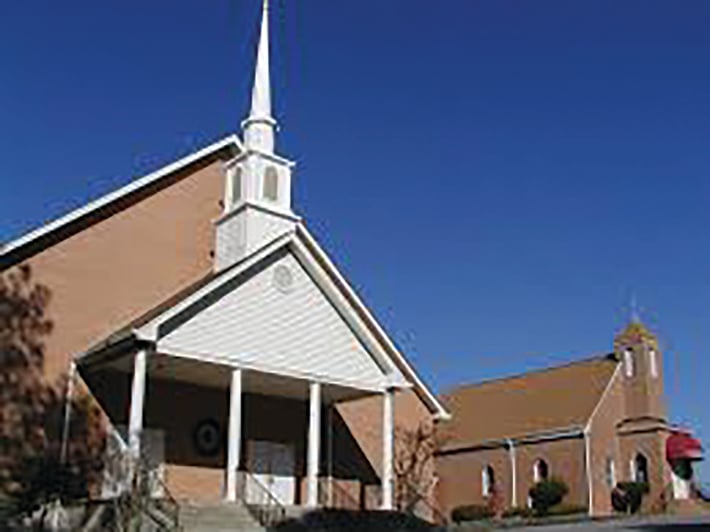
This fall, Pine Grove AME Church will receive an important public recognition of a history that its members have carried for generations. Through South Carolina’s official Historical Marker Program, the story of Pine Grove will become part of the state’s publicly interpreted history—recognizing not simply the age of a church, but the significance of a place that has helped sustain African American families and community life for more than a century and a half.
The South Carolina Historical Marker Program, administered by the South Carolina Department of Archives and History, has operated as the state’s official historical marker program since 1936. Its purpose is to identify and interpret historically significant places that help people understand South Carolina’s past. Importantly, the program emphasizes the connection between history and place: the events and institutions described must have a meaningful connection to the location being marked. Few principles could better describe Pine Grove.
Our church’s history is rooted in three values that helped formerly enslaved African Americans build lives after emancipation: family and community, education, and land ownership. Those values explain why Pine Grove survived. They also explain why its historical recognition matters today.
Pine Grove’s recorded history begins shortly after the Civil War, when formerly enslaved men and women gathered for Sunday afternoon Bush Arbor services. Through hard work, sacrifice and determination, they erected the first church on the present site in 1872. Their achievement becomes even more remarkable when considered in the context of the time.
In 1875, the first church building was destroyed by arson during a period of racial terrorism directed against Black families and communities. Yet the congregation endured. Members continued to worship and support one another. In 1897, Willis Steward donated his share of two and one-half acres to trustees for the construction of Pine Grove African Methodist Episcopal Church, which was completed in 1879.
Think about the significance of that history.
People who had themselves once been treated as property became property owners. They placed land in the hands of trustees. They established an institution meant to outlive them. They created a place where their children could worship, learn and belong.
That is why Pine Grove’s historical recognition is about much more than placing a marker beside a road. The ground itself is part of the story.
From its beginning, Pine Grove was never simply a place for Sunday worship. It became a cultural and community center for African Americans in the Pine Grove and Dutch Fork areas. Church revivals brought families and neighboring congregations together and strengthened relationships that were essential to community survival. Pine Grove’s historical record describes the church as a spiritual and cultural hub that maintained its commitment to community, education and land ownership across generations.
The historical marker will help preserve this past. But the more important question is whether Pine Grove continues to live by the values this past represents. It does.
Today our food pantry assists families facing food insecurity. This is a modern expression of an old Pine Grove principle: when someone in the community is in need, the church has a responsibility to respond. The circumstances have changed. The obligation has not.
Education represents another important part of Pine Grove’s historic significance. Beginning in 1920, Pine Grove served as the first and only school for African American children in the community, continuing in that role until 1956, when it was replaced by a Rosenwald school.
That legacy continues today. Pine Grove provides scholarships to our college students, helping young people pursue higher education and prepare for productive lives and careers. We also sponsor Pine Grove Elementary School, providing mentoring support to children in our community.
There is a beautiful continuity in that work. A church that once provided a school for Black children when educational opportunities were severely restricted now helps another generation succeed in public school and college. That is what a living legacy looks like. Historical preservation should never mean simply admiring what our ancestors did. The best way to honor their commitment to education is to continue educating.
Land ownership gave those ministries somewhere to grow. Pine Grove’s founders understood that ownership meant stability, independence and permanence. Later generations continued to build upon their foundation.
In 2000, Pine Grove constructed a new 600-seat sanctuary and purchased approximately six additional acres. The congregation later acquired another 2.5 acres adjacent to its parking area.
Those investments were not simply real-estate transactions. The land allowed Pine Grove to expand worship, education, fellowship, ministries and community service. It created a physical foundation from which the church could serve succeeding generations.
The historical marker will therefore stand on property that represents one of the central lessons of Pine Grove’s story: our ancestors understood that institutions require both spiritual foundations and physical foundations.
Our breast cancer campaign this fall provides another example of Pine Grove’s historic values being translated into present-day action. The Pine Grove Community Pacesetters have been the highest contributing team to the Walk for Life Campaign supporting Prisma Health Midlands Foundation and Prisma Health Breast Centers. This year, our activities include the October 10 Bake Sale & Fish Fry, the October 17 Walk at Harbison Lake, and Pink Sunday on October 18. Our campaign theme—Faith, Hope & Action—could describe Pine Grove itself.
Faith sustained a congregation after its first sanctuary was destroyed. Hope inspired people to rebuild. Action turned their faith into land, schools, ministries and institutions.
Today that same spirit calls us to confront breast cancer, especially because of its profound impact on women and the continuing disparities affecting Black women. Supporting breast cancer awareness, early detection, patients and families is one more way our congregation accepts responsibility for the health of the community.
So when Pine Grove raises money for breast cancer services, we are doing something thoroughly consistent with our history. We are taking care of one another.
Our hosting of the Annual Conference of the Seventh Episcopal District this fall offers another powerful example of Pine Grove’s continuing legacy. When clergy, delegates and visitors gather at Pine Grove this fall, they will enter a modern sanctuary—but they will also enter a historic place.
They will stand on land secured by generations of African Americans. They will worship within an institution created by formerly enslaved people. They will visit a church that once helped educate Black children during segregation and that now provides college scholarships and mentors elementary students. They will enter a congregation that feeds families through a food pantry and works to address breast cancer and other health concerns.
That is precisely why Pine Grove deserves historical recognition and why the marker represents something important: the State of South Carolina is acknowledging that what happened at Pine Grove contributes to our understanding of the state’s history.
But hopefully, we will see the marker as a beginning rather than an ending. It should prompt children to ask questions. It should encourage longtime members to tell their stories. It should remind visitors that Black history was made not only by nationally famous figures, but by ordinary men and women who bought land, built churches, started schools, educated children, cared for neighbors and refused to surrender when confronted by violence and discrimination.
And it should challenge today’s congregation to ask a simple question: What are we building for the next generation?
Our food pantry, scholarships, mentoring partnership with Pine Grove Elementary School, breast cancer campaign and hosting of the Annual Conference provide part of the answer. They demonstrate that Pine Grove is not historic because its best days are behind it. Pine Grove is historic because the values that sustained it for generations are still alive.
Family and community. Education. Ownership and stewardship. Faith expressed through service.
When the historical marker is placed at Pine Grove, it will tell everyone who passes that something important happened here. Our responsibility is to make certain that something important continues to happen here.
Faith gave our ancestors the courage to begin. Hope gave them the strength to endure. Their action built the institution we inherited. Our service today is how we carry their legacy forward.