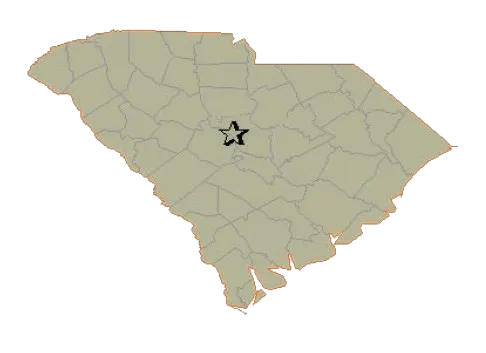
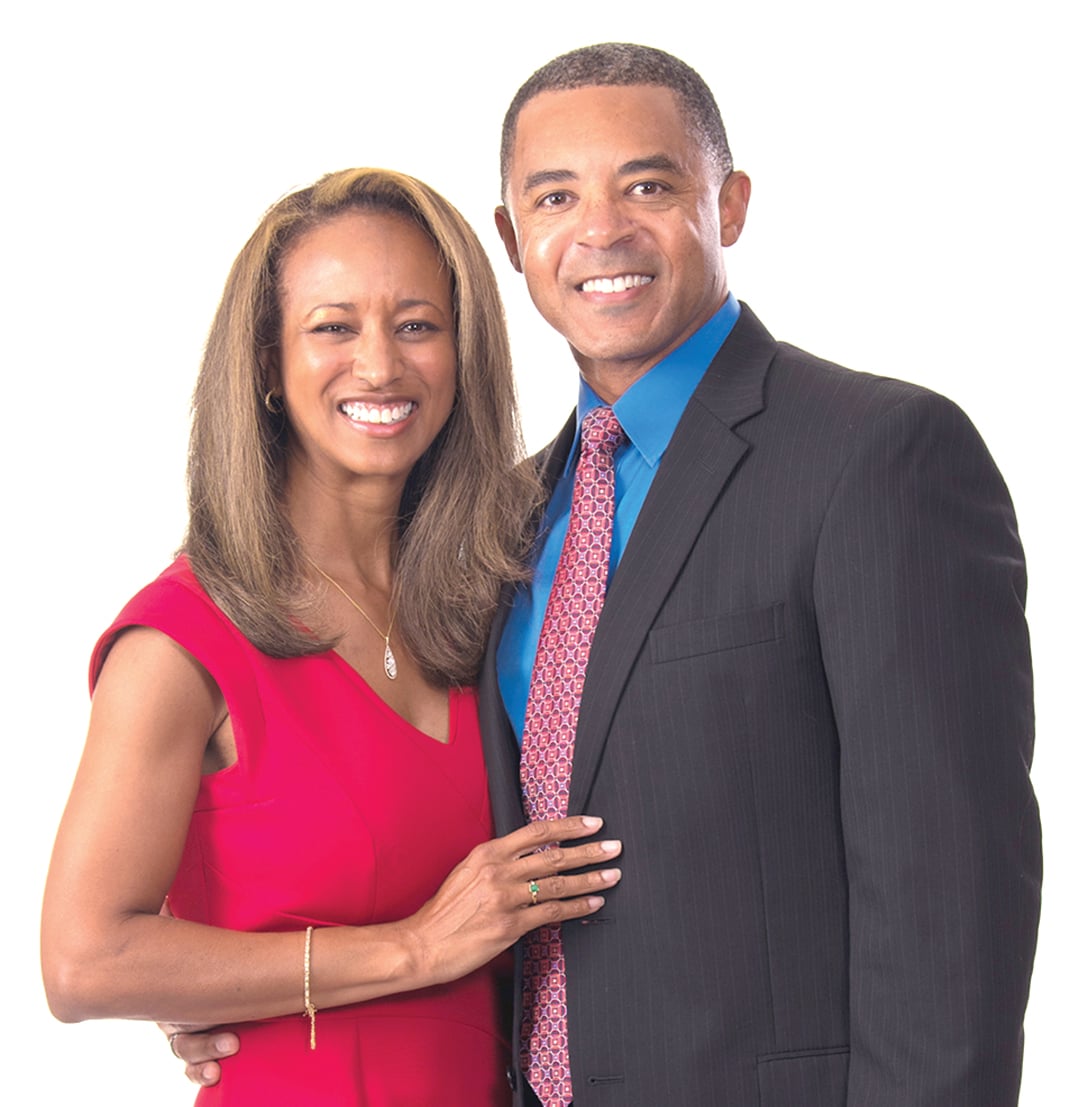
When Mike Reichenbach and his wife, Charisse, packed up their lives in Ohio and moved to Florence, South Carolina in 2008, they were not just buying a Ford dealership. They were planting roots.
“We wanted to have roots and not have to move every two years,” Reichenbach said. “Instead of staying in corporate America, let’s buy a dealership where we could be entrepreneurs and stay planted in the community.”
That choice, made right before the Great Recession, helped shape the man now running for South Carolina lieutenant governor. Reichenbach, a businessman, accountant and state senator, has built his public identity around a blend of financial discipline, conservative politics and a personal story rooted in family hardship and redemption.
Building a life in South Carolina
Originally from Lima, Ohio, Reichenbach earned a degree in accounting and later an MBA before spending years in corporate finance and accounting. The work took him and Charisse around the country, but not in a way that felt sustainable for a young family.
“Corporate America is a great opportunity, but you are usually asked to move about every 18 to 24 months,” he said. “We really didn’t want to raise our kids overseas. We wanted to have roots.”
So the couple moved to Florence and bought their first automotive dealership. The timing was difficult. It was right in the middle of the Great Recession.
“We had many a night of laying awake trying to figure out how we were going to make payroll,” he said. “We had 60 employees, so we had to figure out how to keep them employed.”
The business survived and grew. Today, Reichenbach and his family own multiple dealerships across the Pee Dee and Lowcountry, a success he says he attributes to hard work, careful management and a strong team.
A wife, a partner and a sounding board
Throughout the interview, Reichenbach spoke of Charisse not simply as his spouse, but as the person who has stood beside him in business, politics and family life.
“She is my wife of 30 years, and my business partner and my chief advisor in the Senate,” he said.
The couple met at a church in Detroit, Michigan, where Charisse sang in the choir. Mike was immediately smitten, and didn’t waste any time in making his intentions known.
“We met in January,” Charisse recalled. “We got married in August.”
Their marriage, now 30 years strong, has been central to both his personal and professional journey. The couple has two college-age children who attended the University of South Carolina.
When they were asked what came next after their youngest child headed off to college, Reichenbach said the two turned, as they often do, to prayer.
“We were there at dinner, literally talking to each other and saying, Lord, what do you have next? Where do you want us to be?” he said. “Whatever we do, let it be for God’s glory and for people’s good in whatever seat we’re in.”
Why he entered politics
Reichenbach said his entry into politics grew out of a practical concern: he believed too few lawmakers understood the pressures of running a business.
“One out of every three legislators in our state is an attorney,” he said. “There wasn’t as many business people who understood what a small business goes through.”
He said his background in accounting gave him a different lens on state government. “The mind of an accountant and expense control was something South Carolina needed more of in public office,” Reichenbach said.
That thinking eventually led him into the State Senate, though he said the path there was not automatic. He and Charisse passed on earlier opportunities to run for mayor of Florence and Congress, saying they did not feel called to those races. But when the Senate seat opened, he said, “we felt that that was the right place.”
A personal mission on children and families
For Reichenbach, politics is not only about budgets and balance sheets. It is also personal.
“My biological mother was 14 when she had me, and I was in foster care,” he said. “My life changed dramatically by having a good family who adopted me out of foster care and taught me about faith, hard work, discipline and fortitude.”
That experience, he said, explains why child welfare has been one of his main priorities in the General Assembly.
“When I got into the Senate and had an opportunity to chair the Senate subcommittee on Child Welfare as well as chair the Joint Committee on Children. It really gave a perspective of how much we can do from a public policy perspective to help families and children,” Reichenbach said.
He pointed to foster care, adoption and child protection as major issues.
“We deal a lot with DSS (Department of Social Services) related issues, as well as DJJ (Department of Juvenile Justice),” he said. “There’s roughly 3,300 children in foster care, so what are we doing to help get that number down?”
Reichenbach also described efforts to make adoption more affordable and more accessible.
“Adoptions are expensive right now,” he said. “How can we work to have folks be more engaged in the foster care system, and then to adopt children?”
The lieutenant governor race
Now Reichenbach is running alongside Attorney General Alan Wilson as Wilson’s choice for lieutenant governor. He says the ticket is focused on three core issues: family affordability, business profitability and public safety.
“We are the only gubernatorial ticket that has announced their lieutenant governor,” he said. “We believe we’re applying for a job. When you’re applying for governor and running for governor and lieutenant governor, we want the constituents to be able to ask us both questions.”
Families First
“We want a South Carolina that will be affordable for families and profitable for businesses,” Wilson said at their campaign rollout event. Reichenbach said their shared mission is straightforward: “Families First.”
As lieutenant governor, he said he would champion a Families First Audit Initiative, aimed at finding waste, fraud and abuse in government before taxpayers are burdened by it.
He described government waste as a “hidden tax” on working people. “Waste, fraud and abuse is a hidden tax on people. They don’t see it, but it’s a hidden tax,” he said. “Government doesn’t have a revenue issue. We’ve got a spending issue.”
Taxes, growth and the future
Reichenbach also wants to tackle property taxes, especially for seniors and families on fixed incomes.
“It isn’t right, especially for seniors, that they can have a home that’s even paid off, but they’re still at risk to lose their home because they don’t pay the property taxes,” he said.
He said the Senate has already moved to expand the homestead exemption and that the state must keep looking for ways to ease the burden on homeowners as South Carolina continues to grow.
“We are a state that was 4 million people in 2000 and we are 5.7 million right now,” he said. “That’s 50 percent growth in 30 years.”
\Reichenbach says the major challenge facing the state is balancing lower taxes with the need to fund roads, bridges, water, energy and schools.
“How will we do the core functions of government?” he asked. “If you didn’t pay any taxes, how do you expect to have the core functions met?”
A campaign built on belief
Through it all, Reichenbach returns to the same themes: family, responsibility, limited government and faith.
“I think the Republican Party is a party that believes in limited government, fiscal responsibility, federalism,” he said. “Keep government as small as possible and let the state’s rights be as prominent as possible.”
But he said the deeper motivation is not partisan. It is personal.
“When you realize how important family is and the fabric of family into every element of society,” he said, “people demand the opportunity in life to make a way.”
To learn more about Mike Reichenbach, visit https://wilsonforsc.com/about-mike/. The primary election will take place on Tuesday, June 9, 2026.