Henrie Monteith Treadwell, whose teenage challenge to racial segregation helped open the University of South Carolina to Black students and whose career later focused on health care for underserved communities, died October 27 at age 80, according to the university and South Carolina Public Radio.
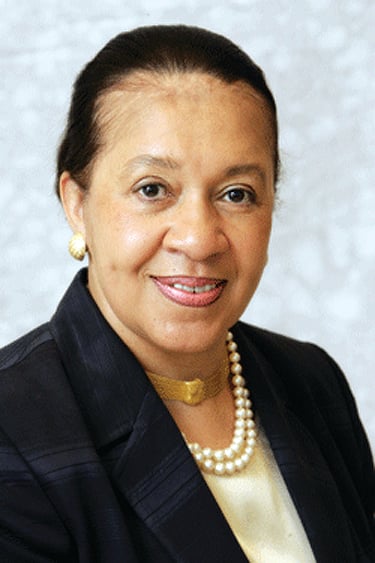
Treadwell was the last surviving member of the three-student group that desegregated USC on September 11, 1963. Alongside Robert Anderson and James Solomon Jr., she became one of the first Black students admitted to the university since Reconstruction. Two years later, she became its first Black woman graduate and its first Black graduate since that era.
“With the passing of Henrie Monteith Treadwell, the last of USC’s three brave desegregation pioneers, we acknowledge the profound role she played in defining our values as an institution,” USC President Michael Amiridis said in a university statement.
A teenager’s challenge to segregation
Born in Columbia in 1946, Treadwell grew up in a family deeply involved in education and civil rights. Her grandmother founded and taught at the Monteith School, where her mother later served as principal. Her aunt, Modjeska Monteith Simkins, was a prominent South Carolina civil rights activist.
In May 1962, Monteith applied to USC and was rejected. With support from her aunt and civil rights attorney Matthew Perry, she challenged the university in court. She was just 16 when she filed the lawsuit that would help dismantle its segregated admissions system.
The ruling in her favor also opened the way for Anderson and Solomon to enroll. Monteith submitted a new application on August 13, 1963. Less than two weeks later, her uncle’s home was bombed, according to the university’s historical account.
The three students registered peacefully that September, but their arrival did not end the hostility they faced. USC’s history records threatening telephone calls, late-night knocking on doors and racial slurs directed at the students.
Treadwell nevertheless remembered moments of acceptance. In a 2019 interview with The State, she recalled people smiling as she walked across campus and described her first day as a positive experience.
“I was very pleased to see that whether people wanted the university integrated or not, they accepted it,” she told the newspaper.
From educational access to public health
Treadwell earned a bachelor’s degree in biochemistry from USC in 1965. She continued her education at Boston University and Atlanta University, earning a master’s degree in biology and a doctorate in biochemistry and molecular biology, followed by postdoctoral work in public health at Harvard University.
Her professional life extended the pursuit of access beyond the classroom. She chaired the division of mathematics and natural sciences at Morris Brown College, served as a program director at the W.K. Kellogg Foundation and directed Community Voices at Morehouse School of Medicine. Her work addressed health care for underserved populations, including Black teenage boys and men, incarcerated people and communities facing barriers to medical services.
A lasting presence on campus
In 2024, USC unveiled a 12-foot bronze monument on its historic Horseshoe honoring Treadwell, Anderson and Solomon — a permanent recognition of the students whose enrollment changed the institution.
Their achievement marked a return as well as a breakthrough: Black students had attended the university during Reconstruction, before its closure in 1877 and subsequent reopening as an all-white institution. Treadwell’s lawsuit helped end the exclusion that followed.
“Henrie made clear that she broke racial barriers at USC not in a spirit of fear, but with great determination and hope,” Amiridis said, “knowing that she was leading a path that others must and would follow.”