By Walter B. Curry, Jr.
FEATURE
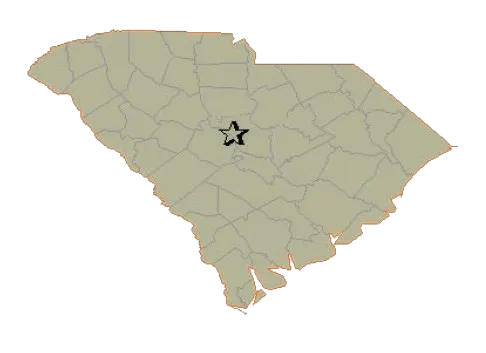
My dad’s mom, Lizzie Williams Curry, was raised in a place called Great Branch, which is to the west of Orangeburg, South Carolina. Great Branch is the name of a creek that flows from the North Edisto River into Moss Pond and then goes over Hwy 4 and Macedonia Road. My grandmother grew up on land that her father, Jerome Williams, bought close to Beason Road. She shared that when she was a child, she and her family would go a few miles to the Great Branch creek to get water.
When I was a teenager and got my driver’s license, I would take my grandmother to Orangeburg to do errands. Sometimes, she would ask me to drive her to important places from our family’s history, where she would tell me stories about her life, our relatives, and the community. When I was a teenager and got my driver’s license, I would take my grandmother to Orangeburg to do errands. Sometimes, she would ask me to drive her to important places from our family’s history so she could tell me stories about her life, our relatives, and the community. One special place we visited was the Great Branch School, where she learned skills for home and farm work that helped her throughout her life. The Great Branch School was built between 1917 and 1918 and grew larger in 1922 and 1923. It was one of the first Rosenwald schools in South Carolina. The story of Great Branch School is well recorded, but my essay will highlight key themes I found through research and stories from my grandmother, along with the history presented at the Great Branch Rosenwald Teacherage.
The Great Branch School and the teachers’ housing were built through the Julius Rosenwald Project, which was started by Julius Rosenwald, the president of Sears and a well-known philanthropist. Booker T. Washington asked for some of Rosenwald’s donations to the Tuskegee Institute to help create schools for African Americans. The Rosenwald Project offered matching funds to communities that needed extra money to build schools like Great Branch, but the local citizens had to contribute as well. From 1917 to 1923, the Great Branch School was built at a cost of about $2,550, with funding coming from various sources: $500 from the Rosenwald Fund, $1,847 from the local African American community, $8 from the nearby white community, and $100 each from Orangeburg County and South Carolina. The important takeaway was the strong financial
Dr. Walter B. Curry Jr. backing from local African American community members who gave generously to help Great Branch School. These supporters came from various backgrounds, including farmers, business owners, teachers, ministers, and skilled workers. They all shared a belief in the importance of education and the role Great Branch School played in preparing African American children for their future careers and lifelong learning.
Students at Great Branch School participated in project-based learning, which helped them gain knowledge and skills through practical projects that tackled real-life issues. On March 15, 1938, the Times and Democrat published an article called “News Of Interest To Colored People-Projects At Great Branch,” highlighting how students built a poultry house on campus to supply eggs and meat for families in the Great Branch community. Senior male student teachers in Agricultural Education from South Carolina State College collaborated with the teachers at Great Branch School to teach lessons to students and local farmers. The article also mentioned that a local farmer, William Mack, collaborated with the boys to create door and window screens. The projectbased learning at Great Branch School showed how the school values collaborating with local community members and colleges like South Carolina State and Claflin College to create learning chances for students. Additionally, the students at Great Branch School were more than regular students; they were apprentices gaining skills and knowledge from experienced people in the community, including William Mack and others.
The Great Branch School had a cannery as part of its home economics program. It was in a separate campus
building with a concrete floor that had drainage, making it easy to use water for canning vegetables. Now, this concrete area is part of the picnic space next to the Great Branch Community Center. Local farmers would bring their harvested crops to the school for canning. They used a big steel kettle to seal the cans, just like the ones we buy in stores today. For a small fee, farmers and gardeners could preserve their vegetables safely for future use. The cannery provided a way for local farmers and people in Great Branch and nearby areas to get canned vegetables. The small fee that the Great Branch School charged for canning these vegetables helped keep the school running. Additionally, the cannery taught students about supply and demand, showing how it served farmers and the community by canning their vegetables based on what people wanted. The idea of having canneries at public schools, like the one that existed at Great Branch School, has caught a lot of attention from the South Carolina General Assembly. Representative Bill Chumley has introduced a joint resolution for a three-year pilot program that would set up community canneries in public schools. This program would allow residents to bring their homegrown fruits and vegetables to be canned for personal use. The resolution also highlights the significant role that these school canneries played during the 1920s, the Great Depression, and World War II, including at Great Branch School.
The Great Branch Rosenwald Teacherage is a special place that keeps the history of the Great Branch School alive. Visitors can see pictures, artifacts, and the original buildings that tell the story of the school. The teacherage is open for tours for the public, groups, and schools. If you want to learn more, you can call (803) 533-1828 or (803) 308- 0666, or email rosakennerly@yahoo.com.You can also visit their website at https://www greatbranchrosenwaldteacherage.com/index.html
Dr. Walter B. Curry, Jr. is the founder of Renaissance Publications, LLC. He is also an author and Educator of Ancestry and Local History.