Long before Benita Left became president of Optus Bank, South Carolina’s only Black-owned bank, she was a student at Orangeburg-Wilkinson High School, the daughter of educators and public servants who expected discipline, resilience and excellence.
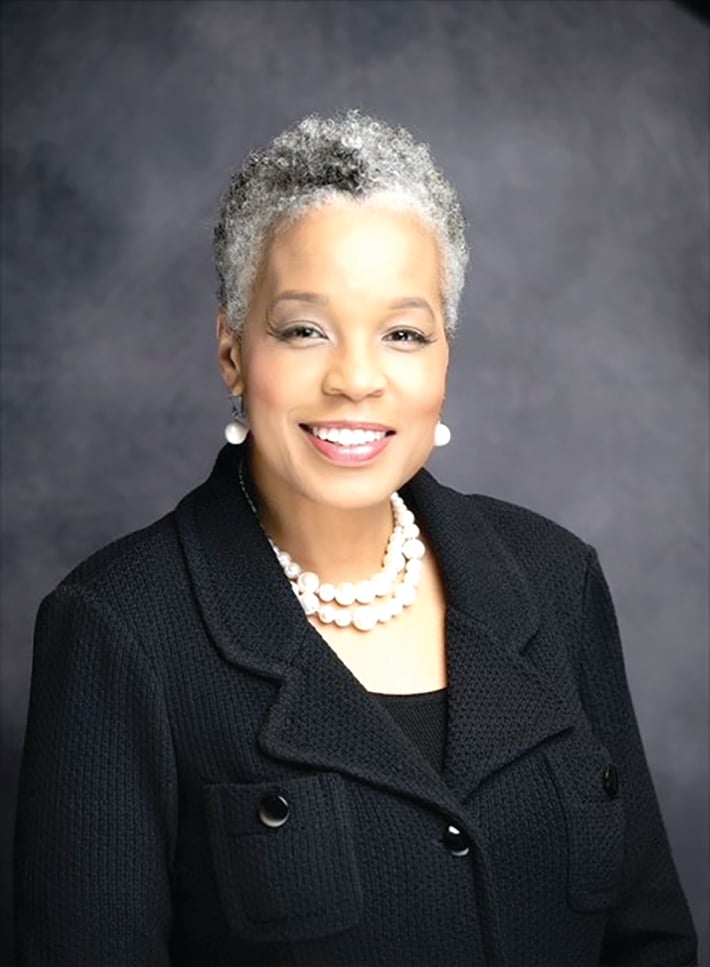
Left’s route to the executive suite was not mapped out from the beginning. She did not set out with a fixed ambition to lead a bank, and she initially turned down the opportunity to join Optus Bank twice after retiring from Wells Fargo. But nearly four decades after beginning as a management trainee at South Carolina National Bank, Left now leads a growing Columbia-based financial institution with a mission rooted in access to capital, community development and Black economic empowerment.
“I wasn’t necessarily seeking to be president,” Left said. “I came to do a job, to give back and to really pour in if I could.”
Her story is one of preparation, setbacks, calculated decisions and a willingness to step into opportunities that she did not always expect.
Orangeburg roots
Left, whose maiden name is Evans, grew up in Orangeburg in a family deeply connected to education, public service and South Carolina State University.
Her father served as chief of police at South Carolina State, while her grandfather was the university’s first groundskeeper. Her uncle worked in the campus dining hall, and several members of her family attended or worked at the historically Black university. Her mother graduated from South Carolina State, and Left’s sister recently marked 50 years connected to the institution.
The family’s ties to Orangeburg and South Carolina State ran deep. Left said she grew up knowing the university’s traditions, its alumni base and its importance to the community.
“I know the South Carolina State alma mater because that’s in me,” she said. “The legacy that my family has there is in me.”
Yet Left’s decision to attend the University of South Carolina set her on a different path. Her older sister, who had attended South Carolina State, encouraged her to consider another college environment if she had the opportunity. Left’s father set one key condition: his children could attend a college in South Carolina where he could afford the tuition.
Left applied to USC while also applying to South Carolina State. At the time, her choice to attend USC drew questions from some community members who wondered why she was not choosing an HBCU. But Left viewed the decision through the history of desegregation and access to higher education.
“People had died and marched for me to have the privilege to go there,” she said. “I saw it as an opportunity.”
At USC, Left said she became intensely focused on succeeding in an environment where Black students had to learn how to navigate systems, locate resources and build their own networks of support.
She recalled older Black students checking on younger students and holding them accountable for attending classes. There were no cell phones, no easy digital access to advisors and no one automatically guiding students through every challenge, she said.
“You had to learn how to navigate and use the resources,” Left said. “Those are skills that I’ve used throughout my career.”
A practical turn toward banking
Left originally considered law school, a path that made sense in part because her husband was pursuing a legal career. But an advisor at USC encouraged her to broaden her options during a difficult job market.
As a junior, Left said an advisor warned her that a recession could make employment more difficult after graduation. The advisor recommended that she add economics to her political science studies to strengthen her job prospects and provide another foundation for graduate school or professional work.
Left listened. She completed a double major in political science and economics, taking classes in macroeconomics, microeconomics and accounting. The decision became a turning point.
“That’s really how I ended up in finance, to be honest,” she said.
While at USC, Left also worked as a page for then-Sen. Marshall Williams in the Senate Banking and Insurance Committee. When graduation approached, management-training programs offered a path into corporate careers for young people with leadership potential, academic preparation and a strong work ethic.
Left interviewed with banks and insurance companies. She received offers from South Carolina National Bank, then commonly known as SCN, and First National Bank. She accepted SCN’s offer and began a yearlong management-training program in Columbia.
At that point, she said, she knew little about banking beyond basic personal experience.
“I didn’t know a thing about banking,” Left said. “I knew my dad went and got a VA loan for the house, but I really didn’t know that much about banking.”
The management-training program changed that. It introduced her to the structure of banking, operations, lending and the expectations of a corporate career. But it also presented one of the earliest and most defining disappointments of her professional life.
A setback that shaped her
Left said she performed well in SCN’s training program, passed the required tests and received strong evaluations. But when trainees were assigned to permanent positions, she was the only person in her class without a placement.
She did not understand why. She called her parents, upset and discouraged.
Her father’s response stayed with her.
“He said, ‘Life isn’t fair,’” Left recalled. “‘Either you want to do this or you don’t. You go back, dust yourself off, go in there tomorrow and outperform.’”
The message was direct, but it shaped how she would approach professional disappointments, particularly as a woman in an industry where leadership positions and commercial-lending roles were often dominated by men.
Left eventually received a branch assignment and became a branch manager in Columbia. She worked at locations near downtown and on Bush River Road, gaining customer-service, operations and retail-banking experience.
But she noticed something important: commercial lenders held much of the authority and decision-making power inside the bank. They made the loans, led major client relationships and often moved into senior executive positions. Meanwhile, she said, she was handling the closing and documentation work connected to commercial loans without being assigned to the lending roles herself.
“I looked around,” she said. “Everybody running banks had the commercial-lending background.”
That observation would lead to another pivotal decision.
Choosing the lending path
When Left and her husband relocated to Dayton, Ohio, while he fulfilled a military commitment, she went to work for Bank One. The bank offered her a choice: take a higher-paying branch-management position or return to a training program to learn commercial lending.
She chose commercial lending, even though it meant taking a step back in the short term.
The choice was strategic. Left had recognized that commercial lending was a key route to influence and executive leadership in banking. She wanted not only to understand the work, but to gain the formal training and experience that could position her for greater responsibility.
“I made a decision,” she said. “If I wanted to run a bank one day, I needed to have that.”
That decision helped establish the breadth of experience that would later define her career. Over time, Left worked in community banking, commercial lending, credit underwriting, risk management, operations and community-development programs.
After returning to South Carolina, she joined First Union, later part of Wells Fargo, and worked at 1441 Main St. in Columbia as an urban community banking manager. Her work included Small Business Administration lending, Community Reinvestment Act initiatives and community-development programs.
She said it was among the most demanding and rewarding work of her career because it allowed her to work directly with small businesses and help deliver capital into underserved communities.
“I had a lot of authority then that I could help small businesses,” she said. “I really enjoyed that.”
Her work eventually took her to York County, where she continued community-development work as First Union became Wells Fargo. During her years with Wells Fargo, Left led increasingly large and complex operations. By the time she retired, she had responsibility for business banking customers with up to $25 million in revenue and had teams and operational connections in markets including San Antonio and India.
Returning to Columbia
After more than 30 years with Wells Fargo and nearly 40 years in banking overall, Left retired. She expected to slow down, explore teaching or consider other pursuits.
Then Dom Miarten, Optus Bank’s former chief executive officer, reached out.
Miarten told her that Optus needed someone who knew Columbia, understood the community and had the broad banking experience to help the institution grow. Left had started her career in Columbia, had family ties to Orangeburg and Sumter, and had spent decades working in the areas of banking that Optus needed to strengthen.
Initially, she said no.
Then she said no again.
After about 14 months of retirement, however, Left found that she was ready for a new challenge. On the third approach, she agreed to join Optus as chief operating officer.
“By the third time, I was really, really bored,” she said. “I said, ‘Okay, I will try. We’ll see how it works.’”
Left arrived at Optus nearly four years ago with responsibility for helping build out the commercial-lending team, improve processes, develop standards and strengthen customer service. Her portfolio included broad oversight across commercial lending, retail banking, marketing and human resources.
The work was markedly different from operating inside a national bank with extensive specialist teams and layers of corporate resources.
“At Wells, when I led large divisions, I had all these resources around,” she said. “Here, you roll up your sleeves and have to figure out how to get the work done.”
That hands-on environment became part of the attraction. Left said she brought experience and technical knowledge to Optus, but she also found herself learning daily about the demands of leading a smaller, mission-driven institution.
When she joined, Optus had approximately $500 million in assets. The bank has since grown to more than $750 million, she said, as it has expanded its capacity and worked to strengthen operations and customer service.
Stepping into leadership
Left said she had not joined Optus with the goal of becoming president. But when Miarten decided to move on, she was appointed to the role.
Once again, she was reluctant at first.
“That’s really not what I came here to do,” she recalled thinking. “But I made the decision to lean into that role.”
As president, Left leads a bank with a distinctive place in South Carolina’s financial landscape. Optus is the state’s only Black-owned bank, and its roots trace to institutions created to expand access to capital and opportunity for Black communities.
That history gives the role added weight. For Left, the job is not simply about growth or financial performance. It also is about serving customers, building a stronger organization and creating opportunity for the next generation of bankers.
“I like measuring impact,” she said. “Some of the improvements and influences are increases in customer service and those kinds of things. I’m just happy that I have been able to influence that.”
She said she expects high performance from employees and sees a responsibility to prepare younger bankers for careers in an industry that continues to change.
“I expect a lot from the next generation of bankers here,” Left said.
A president people still question
Despite her decades of experience, Left said she still encounters moments when people are surprised to learn that she is the president of a bank.
At professional and community events, people sometimes ask what she does at Optus. When she tells them she is the president, she said, the response can be disbelief.
One Black woman reacted by saying, “No way.”
Left said those moments reveal both progress and the persistence of assumptions about who is expected to hold power in banking.
“We’ve made a lot of gains, but even sometimes people don’t believe what they see,” she said.
For Left, the answer has been the same lesson she learned after not receiving a placement in SCN’s management-training program: continue moving forward, remain grounded in personal values and do the work.
“As long as you can look yourself in the mirror every day and see the value,” she said, “you keep going. At any point that you cannot do that, it’s time to do something else.”
From Orangeburg-Wilkinson High School to USC, from a management trainee in Columbia to commercial lender, community-development executive and now bank president, Left said her career has been “a journey” rather than a carefully scripted plan.
“It’s been good,” she said. “And it’s been ordered. I think the way that it was supposed to happen.”