Key details for the early voting period:
Dates: Early voting runs from October 20 to October 31, 2025.
Hours: Early voting centers will be open from 8:30 a.m. to 5 p.m., Monday through Friday.
Closed: Centers will be closed on Saturdays and Sundays.
Election Day: The main Municipal Election Day is Tuesday, November 4, 2025.
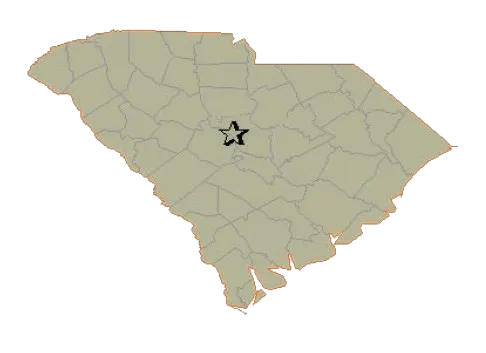
In Richland County, residents can vote early at the County Elections Office, located at 2020 Hampton St., Columbia. For additional early voting locations, you can consult the South Carolina Election Commission website or contact the Richland County Voter Registration and Elections Office.
Such behavior blurs the distinction between government and media independence. Kimmel’s return saw him make a forceful defense of free speech on air, calling the ordeal anti-American, warning against creeping censorship, and explicitly tying political pressure to attacks on democratic norms (The Guardian).
In his return monologue, he said: “A government threat to silence a comedian the president doesn’t like is anti-American.”
Multiple outlets, including the Brookings Institution, have flagged the implications of Carr’s intervention as emblematic of a deeper threat: weaponizing regulatory authority to stifle dissent.
Making the Case: Government Overreach is No Laughing Matter
To tie this together more tightly and argue that Kimmel’s ordeal is a case of government overreach rather than benign corporate decision-making, consider the following:
-
- FCC as an instrument of coercion.
The FCC’s role is regulatory, not censorial. The Communications Act (page 174) explicitly states that “Nothing in this Act shall be understood or construed to give the Commission the power of censorship…” But Carr’s threats to punish broadcasters over a comedian’s content cross that line. The ability to revoke a license is weighty leverage, especially when paired with promises of further “work.” Corporations dependent on license approvals are incentivized to buckle.
-
- Regulatory pressure is different from market pressure.
It is one thing for a network to conclude a show is unprofitable and cancel it. It is quite another for government officials to threaten punishment (fines, license revocations) if the show continues. The latter is coercive. If a broadcaster cancels a show to avoid government retaliation, that is censorship by proxy.
-
- Self-censorship as a chilling effect.
Even though ABC eventually reinstated Kimmel, the damage is real: other hosts and networks may internalize the lesson. Why risk criticism or regulatory scrutiny? The threat of escalation fosters a climate where media organizations preemptively silence themselves. Brookings warns that Carr and Trump are leveraging regulatory authority to reshape the media landscape and suppress dissent.
-
- Precedent and escalation risk.
The pattern is dangerous because it sets precedent. If regulatory threats succeed here, more aggressive content-based interference may escalate. Those who dissent will find fewer safe outlets. What began with a comedian could extend to journalists, documentarians, or scholars critical of power.
-
- Conservatives’ selective zealotry.
When it suits them, many conservatives lionize free speech — until it applies to voices that challenge them. Their defense of First Amendment principles holds only until the target is someone they dislike. This hypocrisy underscores that free speech is being treated not as a principle, but as a combative tool.
In short: this was not an innocent programming decision gone awry. This was a government-adjacent intimidation strategy, using regulatory bodies to enforce ideological conformity. That is the very kind of censorship that the First Amendment was written to prohibit.
The Pattern: Defending Only “Their Own” Moments like this expose a familiar conservative pattern: knee-jerk defense of authority when it serves their side, even if it contradicts their stated principles. The right claims to champion open discourse — unless dissent threatens their narrative or power. They will vigorously defend a business’s right to refuse service based on religious beliefs, yet condemn platforms for moderating hate speech. They champion a speaker’s right to spread misinformation on campus, but remain silent when a journalist is doxxed for revealing inconvenient truths.
True defense of free speech means standing up for speech you find distasteful. Too often, the defense evaporates when the target is ideologically inconvenient, revealing hypocrisy and opportunism.
Why Independent Journalism Matters
Above all, the Kimmel episode underscores the indispensable role of independent journalism and small voices. When conglomerates and mainstream media capitulate under political pressure, the last line of defense is independent reporters, satirists, and citizens who refuse to remain silent.
Large media corporations — beholden to advertisers, corporate boards, or political pressure — are often first to self-censor. But independent journalism, operating with fewer financial entanglements and stronger commitment to truth, is better positioned to resist intimidation.
If even a comedian like Kimmel can be threatened into silence, then no voice is fully safe. The erosion of that safety weakens our democracy. Independent journalism is not just about protecting individual speakers — it is about preserving a plurality of voices and the mechanisms of accountability. Without that, power becomes opaque, dissent becomes dangerous, and the public discourse degrades.
