
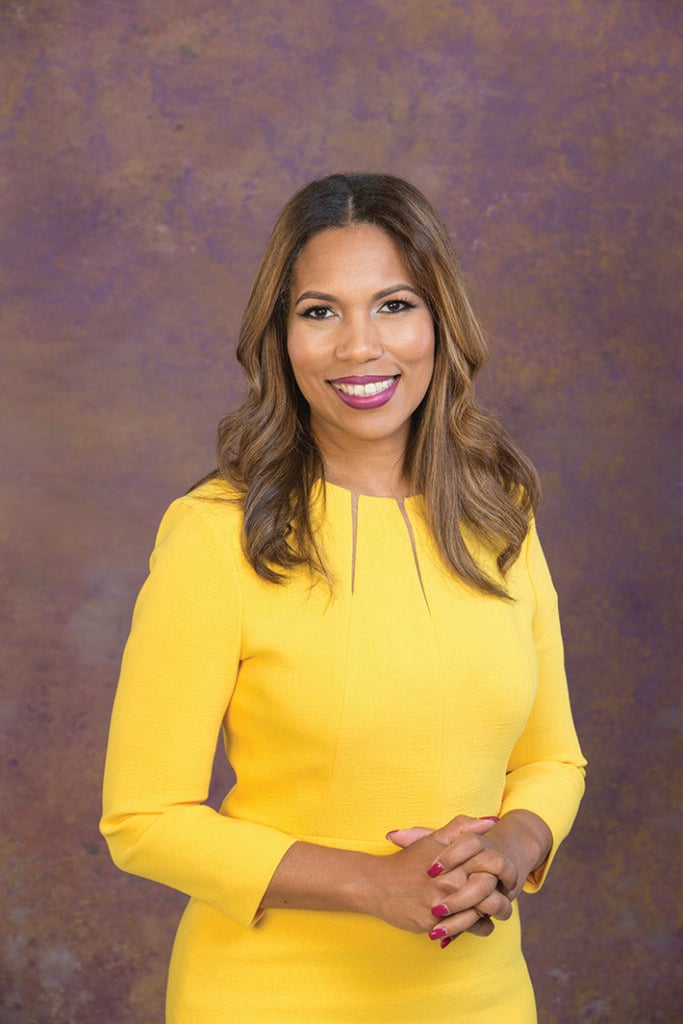
By Dr. Roslyn Clark Artis
Guest Commentary
Every time a young Black man is killed under tragic circumstances, our nation responds with remarkable generosity. Celebrities donate to grieving families. Crowdfunding campaigns quickly reach hundreds of thousands—even millions—of dollars. Scholarships are established in memory of lives cut short. Public figures use their platforms to demand justice, and communities rally around families experiencing unimaginable loss.
These acts of compassion matter. They ease financial burdens, honor lives that deserved far more time, and remind grieving families they are not alone. But as I watch these moments unfold, I cannot help but wonder what might happen if we demonstrated that same generosity, urgency, and collective resolve while young Black men were still alive. What if we invested before the obituary?
Higher education has a unique role to play in answering that question. As president of Benedict College, an HBCU founded on the principle that education transforms lives, I have witnessed firsthand what intentional investment can accomplish. Young Black men do not arrive on our campuses lacking potential. They arrive with extraordinary promise, often carrying burdens that extend far beyond the classroom—financial pressures, family responsibilities, questions of identity, and the weight of societal expectations that too often define them by risk rather than possibility.
Those realities demand more than access to college. They require belonging, mentorship, accountability, and a community that refuses to let students navigate life’s complexities alone. That belief is the foundation of Benedict College’s BEST Men Program – a comprehensive Male Mentorship Initiative.
Our initiative surrounds students with mentors, leadership development opportunities, academic support, career preparation, wellness resources, and a brotherhood committed to their success. It recognizes that persistence is rarely the product of talent alone. Students succeed because someone consistently shows up, challenges them, believes in them, and refuses to let temporary setbacks become permanent outcomes.
Today, Benedict College enrolls a student body that is majority male—an uncommon distinction among private HBCUs and higher education more broadly. More importantly, our four-year graduation rate has doubled over the past eight years, demonstrating what is possible when institutions intentionally invest in student success rather than simply measuring it. Behind every percentage point is a young man whose life trajectory has changed because someone invested before the crisis became destiny.
These outcomes did not happen by accident. They are the product of sustained commitment, strategic investment, and partnerships with organizations that understand the value of prevention over reaction.
Among those partners is the distinguished men of Sigma Pi Phi Fraternity, whose investment in Benedict College’s BEST Men Initiative reflects a profound understanding that leadership is measured not only by responding to tragedy but by creating opportunities for young Black men to thrive long before tragedy ever finds them. Their support is more than philanthropy; it is an investment in human potential, institutional capacity, and generational change. For that partnership, we are deeply grateful.
Imagine if this model became the norm rather than the exception. Imagine if corporations funded mentorship with the same enthusiasm they sponsor memorial funds. Imagine if professional athletes endowed leadership programs instead of waiting to establish scholarships after lives are lost. Imagine if foundations, faith communities, civic organizations, and philanthropists viewed investments in young Black men as one of the nation’s most important forms of economic and social development.
The return on that investment would extend far beyond individual campuses. It would strengthen families, expand our workforce, cultivate future entrepreneurs, educators, physicians, engineers, and public servants, and reinforce the civic fabric of communities across America.
At Benedict College, we know what works. Decades of research consistently demonstrate that meaningful mentoring relationships, educational attainment, strong campus engagement, and supportive peer networks improve persistence, graduation, employment, and long-term well-being. The challenge has never been discovering the solution. The challenge has been sustaining the investment in the effort in the absence of a crisis.
The public attention surrounding tragedy often fades within weeks. The work of developing young men requires years. It is quieter work. There are no viral videos when a student decides to stay enrolled after considering dropping out. There are no national headlines celebrating the mentor who spends countless evenings listening instead of lecturing. Cameras rarely capture the professor who notices a struggling student, the coach who teaches discipline beyond the game, or the donor whose investment allows a first-generation student to remain in school. Yet these unseen moments are precisely where futures are shaped.
Compassion after tragedy will always have its place. But compassion before tragedy has the power to change the story altogether. The greatest legacy we can leave is not simply remembering young Black men after their lives have ended. It is ensuring that more of them live long enough to fulfill the promise that has always existed within them.
Let us continue to comfort grieving families. Let us continue to demand justice. But let us also commit—with equal passion, equal generosity, and equal urgency—to investing in Black boys and young Black men while they are still writing their stories. The most meaningful tribute we can offer is not another memorial. It is another graduate. Another entrepreneur. Another father. Another teacher. Another physician. Another engineer. Another astronaut. Another brother of Sigma Pi Phi Fraternity. Another life fully lived because someone believed in him before the rest of the world knew his name.
Dr. Roslyn Clark Artis is President & CEO of Benedict College.
Dr. Artis has eloquently and accurately captured the urgency in the need to save our black sons, who are both endangered and in danger of becoming another hashtag or has been. Our response to this needs to be proactive instead of reactive.
Dr. Artis makes a powerful and timely point in this article. Her message about investing in young Black males before we are forced to gather for funerals is one that deserves our collective attention. Dr. Artis’s message is ultimately a call to action for us to invest in their futures while they are still here to experience them. Let’s build pathways to graduation, careers, entrepreneurship, leadership, and meaningful lives so that our greatest celebrations are graduations and achievements, not funerals and memorials. Nicely said Madam President!